Early diagnosis of Alzheimer’s disease: why acting now matters
Mild forgetfulness is often perceived as a normal part of ageing. However, modern research shows that cognitive decline can begin long before the clear symptoms of Alzheimer’s disease appear.
The earlier a person consults a doctor, the greater the chances of preserving mental clarity, independence in daily life, and overall quality of life.
At Dobro Clinic, early diagnosis of memory disorders is based on scientific evidence, modern technology, and a comprehensive medical approach.
Age-related forgetfulness or early cognitive impairment?
If it becomes harder to recall words, concentrate, or retain new information, it is not always “just age”.
With age, neural connections do weaken and the speed of information processing does decline. However, some of these changes may be reversible if they are identified and addressed in time.
Modern neurology places emphasis not on waiting for pronounced symptoms to appear, but on early memory screening and assessment of cognitive function.
Alzheimer’s disease in simple terms
Alzheimer’s disease is a progressive brain disorder in which nerve cells are damaged and the connections between them are disrupted.
According to international research, pathological changes may begin 10 to 20 years before noticeable memory problems appear.
In the early stages, a person may notice:
- difficulty remembering new information;
- the need to check plans and lists more often;
- slower completion of familiar tasks;
- increased mental fatigue.
These manifestations are classified as mild cognitive impairment. This is not a diagnosis in itself, but a condition that requires professional assessment.
Why waiting is risky
Delaying assessment means losing time during which the symptoms or their intensity could potentially be reduced.
Modern research shows that lifestyle, nutrition, physical activity, correction of deficiencies, and control of cardiovascular risk factors can significantly slow cognitive decline. However, this is effective only when the impairment is identified at an early stage.
Early Diagnosis of Alzheimer’s Disease at Dobro Clinic
The clinic’s approach is based on international recommendations and the use of modern medical equipment. We create the conditions for patients to complete every stage — from initial screening to specialist consultation — in one place.
1. Cognitive screening (15–20 minutes)
The doctor carries out brief tests to assess:
- short-term memory;
- concentration;
- speed of thinking;
- visuospatial skills.
The tests are also adapted for Russian-speaking and Ukrainian-speaking patients in order to minimise the risk of misinterpretation.
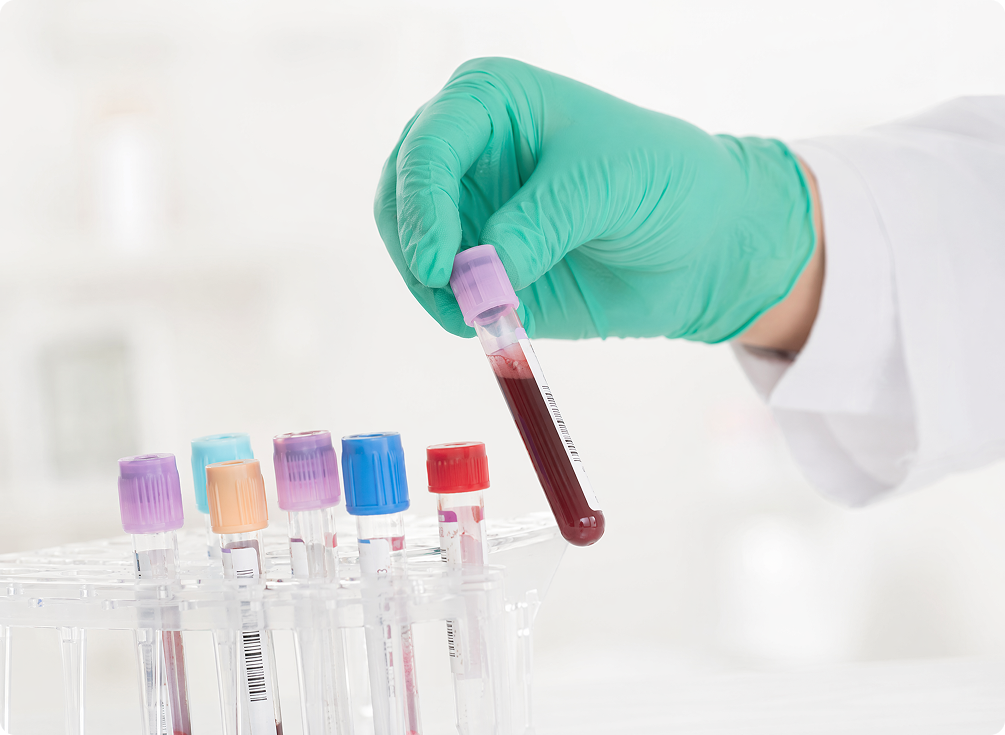
2. Blood tests
Dobro Clinic is equipped with rapid diagnostic technology, including capillary blood analysers. This makes it possible to assess the following promptly:
- vitamin B12 and folic acid;
- inflammatory markers;
- thyroid function (TSH and FT4 hormones);
- metabolic indicators.
These tests help rule out conditions that may mimic cognitive impairment and are often highly treatable.
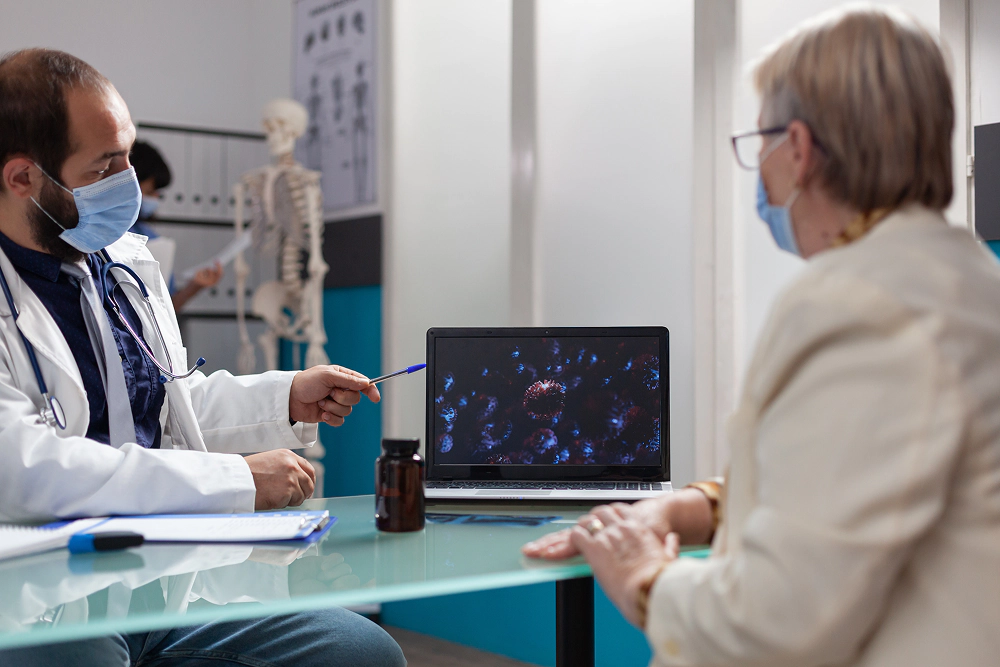
3. Neurologist consultation
The doctor reviews the examination results, уточняет complaints, performs additional tests where necessary, and creates an individual plan.
The consultation lasts 30 to 60 minutes, allowing enough time to discuss all questions in detail and develop a clear follow-up strategy.
4. Cognitive health protection plan
This may include:
- nutritional recommendations, taking into account research on the Mediterranean-style diet;
- an individual physical activity programme;
- cognitive training;
- monitoring of blood pressure, glucose, and cholesterol levels;
- sleep optimisation;
- stress management and cognitive prevention strategies.
The main goal is to help the brain function as efficiently as possible at every stage of life.
Dobro Clinic creates the conditions in which memory care becomes accessible, professional, and confidential. If you are noticing changes in memory, do not wait until they become part of everyday life. Get an accurate assessment and a clear plan of action.