Ultrasound diagnostics have advancved far beyond being a supplementary technology and has become an integral part of modern medical practice. It allows even the smallest pathological changes to be detected at early stages, when treatment is most effective and minimally invasive.
What does the doctor assess during the examination?
The examination allows for a detailed evaluation of internal structures. The specialist assesses the shape, size, and position of tissues to ensure their proper function.
- Uterus and ovaries: assessment for the presence of masses or inflammation.
- Bladder: evaluation of volume and integrity of the walls.
- Surrounding tissue: detection of free fluid or lymph node changes.
Simple preparation guidelines
To ensure a clear image on the monitor, a few simple recommendations should be followed. Before a transabdominal examination, it is advisable to drink around one litre of still water. A full bladder acts as an acoustic “window” for ultrasound. For an internal examination, on the contrary, it is best to empty the bladder in advance. It is also recommended to avoid foods that may cause bloating the day before the visit.
What to expect during the procedure
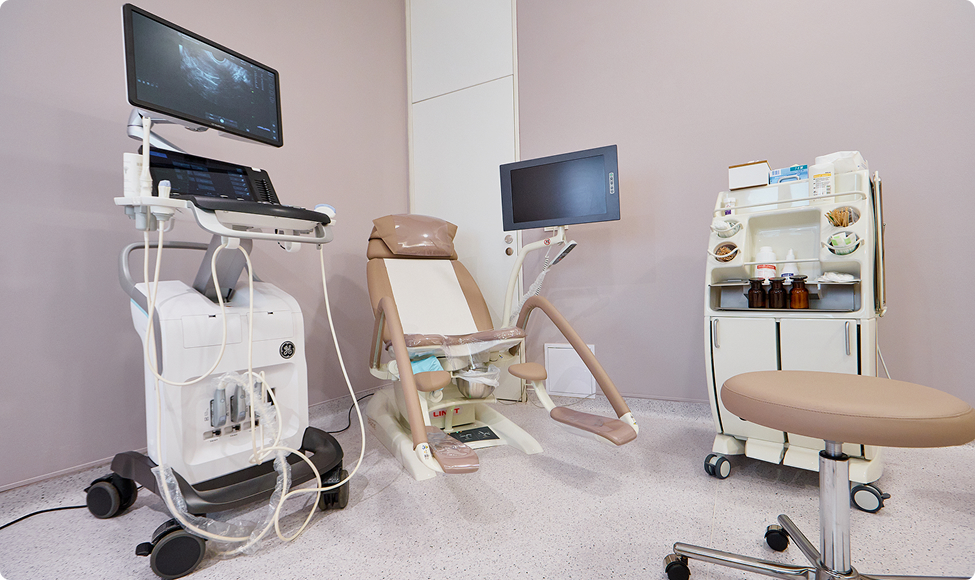
A pelvic ultrasound is performed in a calm and comfortable setting. The patient lies on a couch while the doctor applies a transparent gel to the skin or the probe. This improves contact with the body and helps the ultrasound waves penetrate more effectively. The doctor gently moves the device while carefully analysing the image on the screen. The entire procedure takes approximately 15–20 minutes and does not cause discomfort.
Indications and Contraindications
Indications
There are a number of situations in which a pelvic ultrasound during a gynecological consultation becomes essential in order to identify the cause of discomfort in a timely manner. The main indications include:
- Persistent or acute pain in the lower abdomen or lower back.
- Changes in the menstrual cycle (delays or unusual intensity).
- Preparation for pregnancy planning or monitoring of an existing pregnancy.
- Annual check-ups for those who proactively monitor their health.
- Assessment of the effectiveness of previously prescribed treatment.
Contraindications
There are certain temporary factors that may affect the procedure.
- Skin damage – open wounds, burns, or severe skin irritation in the abdominal area may interfere with proper probe contact.
- Recent surgery. If post-operative wounds in the examination area have not yet healed, the procedure should be postponed until full recovery.