Breast ultrasound is a modern diagnostic imaging procedure that uses high-frequency sound waves to examine breast tissue.
This examination helps detect serious abnormalities, including tumours and inflammatory processes at an early stage, which is especially important for protecting women’s health.
How is a breast ultrasound performed?
The examination is carried out on an outpatient basis and takes approximately 15–20 minutes. It is a completely painless and safe procedure. During the procedure, the doctor applies a special gel to the skin to improve wave conduction and uses an ultrasound probe to scan each area of the breast. The images obtained are displayed on a monitor, then analysed by the specialist and included in the medical report.
What is the difference between ultrasound and mammography?
Mammography is an X-ray method in which the tissues are exposed to a minimal dose of radiation. Breast ultrasound, by contrast, does not use radiation and is suitable for examining younger women as well as those for whom X-rays are forbidden
The main differences are as follows:
- Type of examination:
Ultrasound — uses sound waves; Mammography — uses X-rays. - Age groups:
Ultrasound is more commonly recommended for patients under 40; Mammography is recommended annually for women aged 40 and over. - Safety:
Ultrasound examination is completely safe and can be repeated frequently without limitations.
What conditions can be detected with a breast ultrasound?
Thanks to its high sensitivity and informative value, breast ultrasound makes it possible to detect a wide range of abnormalities in breast tissue.
These include:
- cysts and fibroadenomas;
- fibrocystic breast changes;
- abscesses;
- malignant tumours;
- lipomas and other benign growths.
The procedure is performed by a certified ultrasound specialist.
The specialist analyses the images obtained, prepares a medical report and, if necessary, refers the patient for additional examinations.
How should you prepare for a breast examination?
Preparation for a breast ultrasound is minimal. Patients may be advised to follow a few simple recommendations in order to obtain the most accurate assessment possible.
These include:
- attending the examination during the first phase of the menstrual cycle (from day 5 to day 10);
- avoiding the use of creams and ointments on the breast area before the examination.
You should also bring the results of any previous examinations, if available.
How often should a breast ultrasound be done?
The frequency of examinations depends on the patient’s age and individual risk factors.
For younger women, this examination is carried out on a doctor’s recommendation if there are risk factors or, ideally, once a year as a preventive measure.
For patients over the age of 40, it is recommended annually together with mammography.
Advantages of breast ultrasound at our clinic
If you need to undergo this examination in Prague, we warmly welcome you to Dobro Clinic.
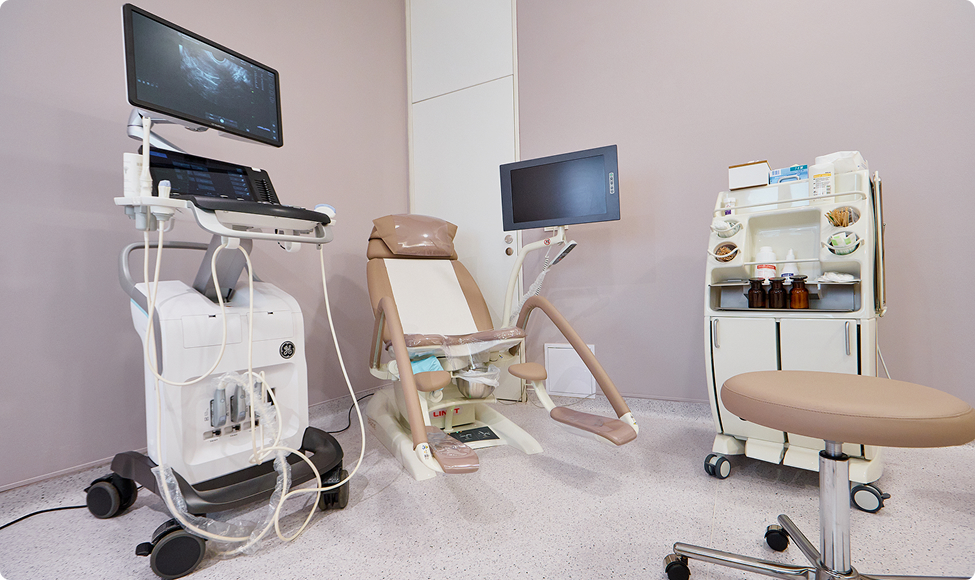
We use advanced expert-level equipment with built-in artificial intelligence enhancement, LOGIQ E10, and all examinations are performed by experienced specialists.
Our advantages:
- highly accurate diagnostics;
- prioritisation of the patient's comfort;
- prompt results;
- an individual approach to every patient.
You can book your appointment online at a time that suits you.
The price of a breast ultrasound is listed in the price section on our website.
Indications and contraindications
The method has no absolute contraindications, although in certain cases the examination may be postponed. Breast ultrasound is recommended both when pathology is suspected as well as for the purposes of prevention.
Indications
- pain, lumps, or discomfort in the breast;
- a family history of cancer;
- follow-up after treatment of fibrocystic breast changes or other conditions;
- preparation for pregnancy and breastfeeding.
Contraindications
Relative contraindications include:
- skin damage in the examination area;
- acute inflammatory conditions;
- allergy to the gel (extremely rare).