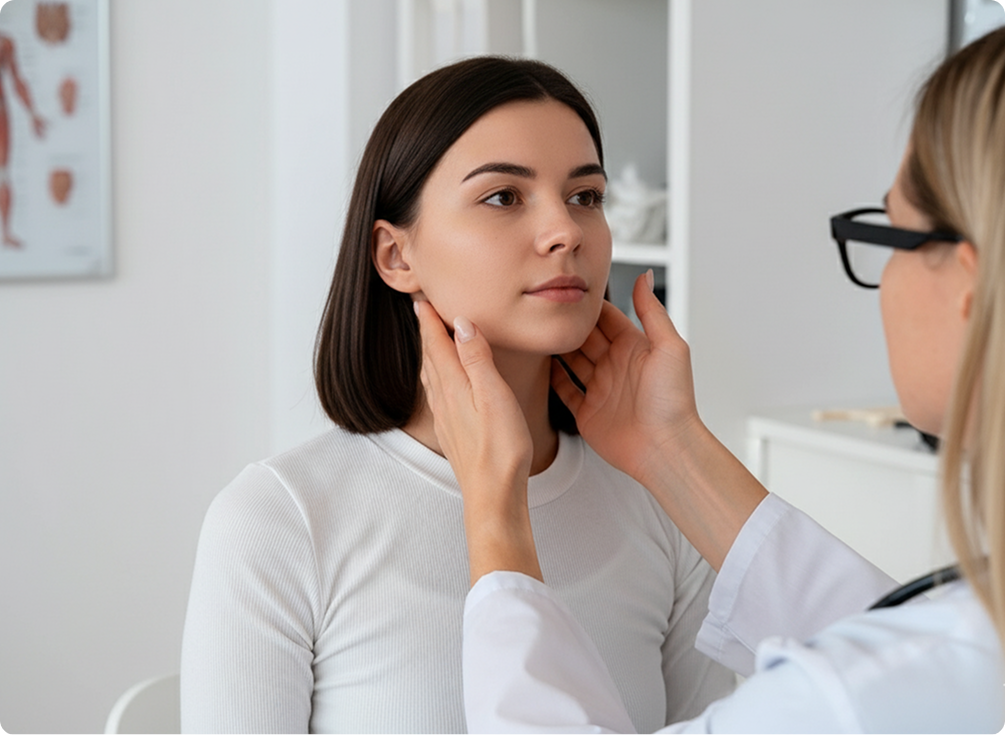
Thyroid Gland Health: Rethinking the Approach to the Management of Nodules and Autoimmune Thyroiditis

Thyroid nodules and autoimmune thyroiditis are very common and, in most cases, do not require urgent surgery or aggressive treatment. The key factors are accurate diagnostics, monitoring over time, and a clear understanding of what is happening in the body.
Thyroid Nodule: Why It Is Not a Reason to Panic
According to international statistics, up to 90% of thyroid nodules are benign. In most cases, they are detected incidentally during an ultrasound examination, especially after the age of 30 to 40.
It is important to understand:
- A nodule ≠ a malignant tumour.
- Autoimmune thyroiditis ≠ “the hormone levels are abnormal”.
- Quality diagnostics are more important than the mere fact that a nodule is present.
Proper differentiation makes it possible to avoid unnecessary surgery and choose the correct monitoring strategy.
What Thyroid Nodules Are — Explained in Simple Terms
A nodule is an area of tissue that differs in structure from the rest of the thyroid gland. It may be solid, cystic, or mixed in nature.
Why nodules may develop:
- Iodine deficiency;
- Age-related tissue changes;
- Genetic predisposition;
- Previous inflammatory processes;
- Hormonal fluctuations and chronic stress, as possible contributing factors.
When a Nodule Requires Closer Monitoring
There are objective criteria that require increased attention:
- a size greater than 1 cm or clear growth over time;
- increased blood flow according to Doppler ultrasound;
- features of increased risk according to the TI-RADS classification system;
- complaints of pressure in the neck or discomfort when swallowing.
Even if these features are present, the decision regarding surgery is made only after a comprehensive assessment, including laboratory tests, ultrasound imaging, and, where necessary, molecular diagnostics.
Autoimmune Thyroiditis (Hashimoto’s): What Happens in the Body
In autoimmune thyroiditis, the immune system mistakenly attacks the cells of the thyroid gland. Over time, this may affect hormone levels, but the process usually develops gradually.
A person may experience the following symptoms:
- Chronic fatigue
- Anxiety
- Weight fluctuations
- Dry skin
- Reduced concentration
Autoimmune thyroiditis is not defined by TSH alone. When managing a patient, it is important to take into account immune burden, nutritional deficiencies, stress levels, and sleep quality.
Why the Standard “Monitor + Thyroxine” Approach Does Not Suit Everyone
Thyroxine, as a medication, is helpful when hypothyroidism is present — that is, when TSH is elevated and FT4 is reduced. However, it does not affect antibody levels and does not “switch off” the autoimmune process.
Common misconceptions include:
- “If you take hormones, the antibodies will disappear.”
- “If antibodies are present, thyroxine is definitely required.”
- “Diet will cure Hashimoto’s” (it will not cure it, but it may reduce inflammation and symptoms).
What may also be important to assess, after consulting a doctor, if autoimmune thyroiditis is suspected:
- iron and ferritin levels
- vitamin D
- selenium
- vitamin B12
- inflammatory markers
- assessment of gut health if symptoms are present.
These are factors that may influence both the patient’s wellbeing and the course of the condition.
Thyroid Diagnostics at Dobro Clinic
1. High-resolution ultrasound makes it possible to perform:
- precise assessment of tissue structure and density
- blood flow analysis
- early differentiation of nodules
- preparation of an objective TI-RADS report
2. Extended hormonal profile diagnostics
We use panels that provide a comprehensive overview:
- TSH, FT4, FT3
- antibodies: anti-TPO, anti-TG
- inflammatory markers
- testing for vitamin and micronutrient deficiencies
3. Molecular diagnostics (only when genuinely necessary)
This is recommended only for nodules with unclear or borderline characteristics. The method helps clarify the level of risk and avoid unjustified surgical intervention.
4. An Individual Plan for Restoring Balance
- nutrition in autoimmune thyroiditis, aimed at reducing inflammation and addressing gluten sensitivity if symptoms suggest it
- correction of vitamin and micronutrient deficiencies
- work on stress management and sleep quality
- recommendations regarding physical activity
- regular follow-up over time
The thyroid gland is a sensitive but manageable organ. Competent diagnostics make it possible to maintain balance without unnecessary interventions.
Book a consultation at Dobro Clinic and receive an objective understanding of your thyroid condition together with a personalised monitoring plan.